<img height="1" width="1" src="https://www.facebook.com/tr?id=5270442586339273&amp;ev=PageView &amp;noscript=1">

BLUUM_Logo_Lockup_LeafPine@4x


Real Connections Start in the
Classroom, Not on a Screen

How schools are implementing effective cell phone policies in 2026 to protect instructional time, improve student focus, and support teachers. 


Across the country, districts are rethinking cell phone use during school hours. From bell-to-bell bans to structured phone-free school environments, the goal is clear: protect attention, strengthen relationships, and create classrooms where students can truly engage.

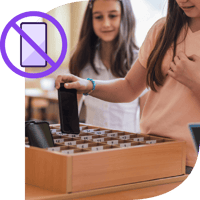
Bluum partners with districts to design and implement school cell phone ban strategies, including cell phone storage solutions, policy guidance, and scalable deployment support.




Get Help Implementing a Cell Phone Policy


ITAD_Cellphone_SpportingLeft


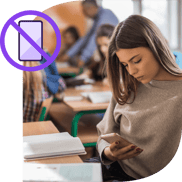
Protecting Instructional Time in the Age of Constant Distraction


The conversation around student screen time in schools has shifted from “if” to “how.”

Educators are navigating a reality where attention is fragmented, classroom management is more complex, and teaching competes with devices designed to capture attention.

  • 72% of teachers say cell phone distraction is a major problem
  • Policies without systems lead to inconsistent enforcement
  • Instructional time is one of the most limited and valuable resources in education

Schools implementing clear, consistent school phone bans are seeing measurable improvements in:

  • Student focus and engagement
  • Classroom culture and relationships
  • Teacher satisfaction and retention


This isn’t about restriction. It’s about protecting the conditions for learning.

ITAD_Cellphone_SpportingRight


From Partial Restrictions to Bell-to-Bell Bans: Understanding Your Options


There is no one-size-fits-all approach to a cell phone policy in schools in 2026. Most districts fall along a spectrum: 

Icon_BelltoBell


Bell-to-Bell Ban
Devices off and stored all day

Icon_StructuredAccess


Structured Access
 Limited use during lunch or passing periods  

Icon_TeacherManaged


Teacher-Managed Policies
Varying expectations by classroom

Icon_OpenUse


Open Use Environments
Student self-regulation
Research and real-world implementation show us that the more consistent and simple the policy, the more effective it is.

The schools that succeed in adopting a phone-free education model are those that integrate systems to support it.

Insights from the Field: Research and Perspective from a Bluum Expert


Explore expert-backed insights on cell phone bans in schools, grounded in research and real classroom experience.


CellphoneBan_Hero1


Protecting Teaching & Learning Across Campuses:
The Case for Thoughtful Cell Phone Policies

How bell-to-bell bans and structured school phone policies impact student attention, memory, and academic performance. 

A research-driven look at the spectrum of cell phone use policies, why developmental stages matter, and why consistent, schoolwide expectations outperform fragmented approaches.

Read Article

CellphoneBan_Hero2


Protecting & Supporting Teachers:
What Cell Phone Policies Mean for Educators
 

Understanding how student cell phone use during school hours
impacts teacher stress, burnout, and classroom effectiveness.

This article reframes the conversation by highlighting how unmanaged device use increases teacher workload, contributes to burnout, and undermines classroom culture, and how phone-free schools restore the teaching experience.

Read Article

CellphoneBan_Hero3


The Academic Case for Phone-Free Schools:
A Literature Review

What research says about student focus, screen time, and learning outcomes in phone-free education environments.

A synthesis of emerging research on cognitive load, attention, and academic performance—making the case for cell phone bans in schools as a lever for improved outcomes. 

Read Article


Meet the Expert
Behind the Research

KatieLarsen_Headshot_Petal

Dr. Katie Larsen
Senior Researcher and Education Strategist, Bluum 


Dr. Katie Larsen is a Licensed Educational Psychologist and Nationally Certified School Psychologist with advanced training in education and cognitive neuroscience from Harvard University and a doctorate from UC Santa Barbara. She has spent over a decade working directly with students, families, and educators, and now leads research at Bluum focused on the impact of technology on learning outcomes.

Her work centers on student well-being, instructional effectiveness, and the role of technology in modern classrooms, helping districts make informed decisions about cell phone policies, student screen time, and classroom engagement.

Turning Policy into Practice: How Bluum Helps Districts Succeed


A policy alone doesn’t change behavior, but implementing the right solutions and practices does.

Bluum helps districts operationalize school cellphone bans with a full lifecycle approach:

Plan

  • Policy consultation aligned to district goals
  • Stakeholder alignment across IT, academics, and operations

Implement

  • Scalable cell phone storage solutions (carts, pouches, classroom systems)
  • Deployment and integration support

Adopt

  • Professional learning for staff
  • Communication strategies for families and communities

Sustain

  • Ongoing support and lifecycle management
  • Continuous improvement based on usage and outcomes  

Because protecting student focus and instructional time requires a thoughtful system.  

Ready to Build a Phone-Free Learning Environment? 


Whether you’re exploring a school cell phone ban, refining your cell phone policy for 2026, or looking for scalable storage and enforcement solutions, Bluum is here to help.

Let’s design a solution that protects your teachers, supports your students, and maximizes every minute of instructional time.

 

pattern-bluum-garden-01


Bluum supports K–12 districts nationwide with cell phone policies in schools, including bell-to-bell bans, school phone ban implementation, student screen time reduction strategies, and cell phone storage solutions. Our outcome-driven approach helps schools create phone-free environments that improve student focus, protect instructional time, and support teachers.